

Interview: Sharon G. Flake
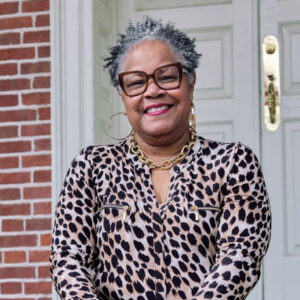
I recently reviewed Hattie Mae Begins Again by Sharon G. Flake. I enjoy reading books by her so much! I first remember Sharon from Skin I’m In, back in 1998. Any writer who can maintain a career this long is worth paying attention to. Not only has she mastered the craft, but Sharon understands, cares for and relates to young people.
I don’t think I’ve ever had the opportunity to interview Sharon and thought this would be a good time to get to know her and her books a little better. I’m so glad we were able to connect, so I could more fully appreciate all that Sharon brings into her stories. I also like the insights she provides here that connect her books to each other and to her readers. When the interview begins (email interview), you’ll see that I forgot Sharon left Philadelphia years ago. Luckily she still has a strong family base there and was able to tap into the city’s rich culture that appeals to young people.
ADVERTISEMENT
ADVERTISEMENT
Hattie Begins Again releases on 13 January. Pre-order you copy now! At the bottom of the interview, you’ll find upcoming dates for Sharon’s appearances, a chance to get your books autographed!
Sharon, thanks for such an engaging interview!

ADVERTISEMENT
ADVERTISEMENT
EC: You are quite proud of Philadelphia! If someone were to bring their middle grade age children (8-12 yrs) to visit the city for a few days, what places would you suggest they visit?
SDF:I no longer live in Philadelphia, though I am there at least six times a year. Therefore, I turned to my teenage nephew Mason for assistance, then added a few things to the list.
- The Galleria in downtown Philadelphia to shop or go to the movies
- Smith Playground, which includes one of the nation’s largest slides sometimes called a giant or mega slide
- Fisher Park for a good game of basketball
- Fairmount Park, one of the biggest parks in the nation
- The Franklin Institute
EC: You made a lot of choices with this story: middle grade. novel in verse. historical fiction. girl main character. bicycles. Philadelphia. What did Hattie’s originally look like and what were the things you really couldn’t change about it?
SDF: Originally Hattie was hell bent on saving Alabaster, a young boy she befriends in the book. In her eyes, he was an underprivileged kid looked down upon by snobs at her new private school. However, Hattie’s need to coddle Alabaster was too close to the relationship she had with her brother James Henry in my first novel, Once in a Blue Moon. James Henry needed Hattie to be his champion, warrior and protector. Realizing this, I was able to flush Alabaster’s character out more fully. As a result, he now adds value and texture to Hattie’s life, rather than appearing as an appendage. Alabaster is frank, humorous, wise and caring. He grounds Hattie Mae, brings out her playful nature and stands by her side in the toughest of times. He is a real, true friend and a genuinely nice boy. In making this change, Hattie’s character arc shifted as well. For once, she allows herself to make mistakes and learn from others. Along the way, readers witness Hattie’s compassionate nature, her eagle-eyed curiosity and ability to find solutions to super big problems that even adults in the book can’t solve. At one point, Hattie exclaims that she wants to leave her mark on the city like many other Black women have. By using her intelligence, entrepreneurial skills, and commitment to helping others, Hattie does just that.
EC: What was your community like growing up in Philadelphia? In what ways did it support children?
SDF: Often, when you come from an urban inner-city background like I grew up in, people do not allow you to feel grateful for that community, or to say how much you loved it or were loved there. To me, our block was like a small town. Like many streets in Philadelphia, it was very narrow. I could step onto my front porch and stare into my neighbor’s eyes. People there knew that my mother baked the best cakes and they could call each of us six Flake kids by names. Most of the adults on our block had the same value system—work hard, look out for your neighbors, pay off your home, and be sure to get a little enjoyment out of life. They could parent us pretty much the way they would parent their own children. If one of the Flake kids stepped onto the porch while our dad was at work or mother was out of the city doing day’s work, Ms. Connie or Ms. Porchia across the street would say, “Does Bert know you’re out here?” Of course we’d say yes. But they knew better and would tell us to “Get back in that house.” And we did. On our block, we could not play basketball or loud games after a certain time. But then again, we could always look forward to the fire plug being on full blast during the summer. Mr. Nixon had the key to the fire plug for years. That memory of him turning on the water is etched in my brain. He shows up as a character in one of my books. The adults put on a block party once a year. That image is also in my novel, Money Hungry. My father did not own a car. So, Miss Mary would drive us kids to Jersey when she went to buy crabs to sale. I got my first Dairy Queen Ice cream cone on such a trip. It seemed ten-feet high. On a more serious note, one neighbor had to get my brother out of jail once. A crime had been committed by a young, Black boy. Rizzo, the notorious police commissioner of Philadelphia at the time, ordered the police to do whatever to find the culprit. It did not matter if those young Black men fit the profile of the accused or not. It was my neighbor, Mr. Earle, a police officer, that my father called on for help. He was the one that got my brother—totally innocent—out of jail.
EC: How does using historical fiction to express social issues make these realities more accessible to young readers?
SDF: Whether my novels are set in contemporary times or historical ones, I am always looking to do the same thing– show young readers the connection between who they are today and what happened yesterday and beyond. I use history to help them see their communities through a different lens, one in which Black youth and their ancestors use their minds, talents and grit to live or strive for the life they envision, not simply the one people want to hand them. I give young characters in my novels the power of choice, the ability to fall and rise again to conquer a situation, their fears or something that may have a strangle hold on them for the moment. I write the books I’d like to read. It turns out, young people say they enjoy reading them as well.
EC: Hattie seemed to have arrived in Philly with a bit of class awareness. She arrived because she wanted ‘more’. What was that ‘more’?

SDF: When you read my first book Once in a Blue Moon, you get to see Hattie in relationship with Lottie Jean the dentist’s daughter. Hattie and her brother James Henry are living on the farm in North Carolina when Lottie Jean arrives. Hattie is in awe of Lottie’s many fancy dresses and her New York sensibilities. Hattie is taken with her in part because of what she represents—a modern era and a modicum of wealth. Hattie and her people are not poor. They are rural folks with middle class values. Hattie Mae is the daughter of a teacher, so she appreciates and values education. She is interested in being educated as much as she is in raising her station in life. Attending a private school will give her these things she believes. But residing in Philadelphia, a city with a rich Black history and many accomplished people living in her community, Hattie decides she wants much, much more–to leave her own mark on the city for starters.
EC: What do you want readers to know about Hattie Mae Begins Again that I’ve not asked?
SDF:
- Hattie May Begins Again is a fun, fast read that explores our ties to family and community, and the things we carry with us when we travel far away from home.
- My book is told in verse. It is organized into short concise, impactful chapters filled with vivid imagery and realistic, engaging characters and dialogue. Readers will be able to learn and understand important literary concepts and ideas in a user friendly and engaging way.
- Every family, block and city has a history. My hope is that young readers will interview older family members and others close to them and document their findings. Students may then take a second look at their own communities, recording what makes it unique and special to them. Following interviews and research, students can write a piece in verse using what they now know and understand differently about themselves, their families and the places they live.

Be well and do good!
Filed under: Interviews, Uncategorized

About Edith Campbell
Edith Campbell is Librarian in the Cunningham Memorial Library at Indiana State University. She is a member of WeAreKidlit Collective, and Black Cotton Reviewers. Edith has served on selection committees for the YALSA Printz Award, ALSC Sibert Informational Text Award, ALAN Walden Book Award, the Walter Award, ALSC Legacy Award, and ALAN Nielsen Donelson Award. She is currently a member of ALA, BCALA, NCTE NCTE/ALAN, REFORMA, YALSA and ALSC. Edith has blogged to promote literacy and social justice in young adult literature at Cotton Quilt Edi since 2006. She is a mother, grandmother, gardener and quilter.
ADVERTISEMENT
ADVERTISEMENT
SLJ Blog Network
Publisher Preview Fall 2026/Winter 2027: Barefoot Books and Beaming Books
A Beginner’s Guide to Leveling Up | This Week’s Comics
Nonfiction Roundup
From Policy Ask to Public Voice: Five Layers of Writing to Advance School Library Policy
Our teens need a true diversity of books—and they always have, a guest post by Susan Metallo
Lois Lowry Visits The Yarn
ADVERTISEMENT