

Narrating the Past
READ OR LISTEN
Often, when I’m feeling a longing for better times, I consider my childhood days. I think, when we have the privilege to do so, we form memories that are pleasant and comforting.
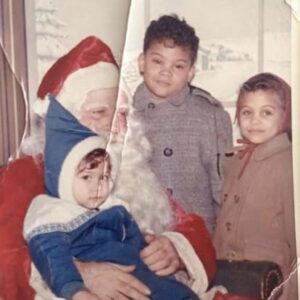
I mostly remember playing with my friends in my neighborhood. My brother, sister and I were loved and cared for, were given middle class values, expected to go to college, and to respect our elders. My father worked swing shift and was often available to take us to the library, beaches on Lake Erie, the Toledo Zoo and Art Museum on weekdays during our vacations. I remember holidays with my grandparents and road trips to Detroit and Chicago to see family. The evening news was a given in our house, as was The Toledo Blade. The memories are flooding back, but I’ll save you at this point and admit it felt good, but partially because ignorance is bliss. The narrative of my childhood, what I experienced devoid of what was going on around me, was good.
ADVERTISEMENT
ADVERTISEMENT
I was a child throughout the 1960s and a teen in the 70s. My family integrated the neighborhood where I grew up. White flight became quick and deliberate, leaving a predominately Black working class neighborhood that felt safe. We all played Two Hand Tap or a fun little baseball game called One A Catch in the middle of the street and we girls played with dolls. Our Barbies were white and our music was Black. My closest friends lived in my neighborhood.
ADVERTISEMENT
ADVERTISEMENT
My schooling (grade school and high school) was predominantly white. I never studied Black history or literature, or had a Black teacher. Most microaggressions went unrecognized by me, but I remember my 4th grade teacher, wanting to improve my diction by requiring me to memorize “The Swing” by Robert Louis Stevenson so I could recite it to the class. We also read Treasure Island and Huckleberry Finn that year. I only racialized my memories as an adult.
The news was always on in my home and to this day, the evening news will still be on in my car or my home. While I ignored it a lot as a child but, I do have vivid memories of images from Vietnam, Philadelphia, and Detroit. Maybe there was just not enough connecting me to these events for me to be interested in them. I do know that the word “inflation” is forever ingrained in my memory from that time. The significance of The Chicago Seven, Elijah Muhammad, and Barbara Jordan was lost on me then. I would have a familiarity with events, but not an understanding, definitely no questioning of ideologies or practices.
These stories from my childhood that comfort me are limited to my tiny world. The 60s were a rather violent time in this country, a revolutionary time that my younger self missed. I wonder how much more I might long for them today if I could be encouraged by the political and social progress that occurred during that time. When does protecting children do more harm than good? If I’d understood those times better, maybe I’d be better prepared for these, and so would my children.
There are so many ways to inform the stories that shape in our minds. understand please, that I’m not blaming teachers or parents, or even myself for what I didn’t learn back then. I’m suggesting, though, that when we know better we can do better. We can make sure that we’re talking to our children now. Today’s 15-year-olds will be able to vote in the next presidential election.
I visited the public and school library a lot back then. What if there’d been more books with “characters who looked like me” which, by the way would have been really problematic to have a bunch of books with light skin Black girls with hazel eyes. Can we call it books with Black characters? We needed more books with Black characters! More than the copies of Soul Brothers and Sister Lou and Jubilee that I read in high school.
Renée Watson, Jacqueline Woodson, Zetta Elliott, Jason Reynolds, Kacen Callender, Mahogany Brown and Candace Iloh would have gotten me to feel comfortable and confident in my own skin while I was traveling back and forth between a Black world and a white world without the capacity to even wonder why this dichotomy existed.

Learning how to adjust to two worlds may seem ideal, but I’d consider this as the root cause of my imposter syndrome. I never feel like I fit in, my story was too disjointed. Young people need to feel like they belong wherever they choose to be without the need to adjust who they are! Back then, mainstream news was in the background, delivering information that never really caught my attention. Now, information is packaged with glitter and puppies, curated and distributed to young people on the devices that attach to their fingertips. They connect when Kendrick Lamar sets the tone for the story they’re about to witness. Many young people create their own content allowing those of us who missed it the first time around to learn a bit from them.
There are teens who are directly impacted by policy changes to health care and education, and they witness the fear in their Latine, immigrant, trans, neurodivergent, and LGBTQIA+ classmates in real time. Their parents may not talk to them about these issues any more than mine did, but they are drowning in them. They need the stories that are available to them now.
What kind of memories will give them comfort? In the immediate, it can be found in books when they connect to stories by George M. Johson, Sharon Flake, Ibi Zoboi, Justin A. Reynolds, Tiffany D. Jackson, Akwaeke Emezi, Alicia D. Williams or other Black authors who write for teens. These fictional narratives will inform and shape their consciousness. “We often believe in a story not necessarily because it is factually true; we accept a story as true because it connects with our values, or is relevant to our experiences in a way that is compelling.” (source, p. 20)
We have books now to give young people so that they don’t come to accept oppression as normal and so they can figure out their role in shaping tomorrow. These same authors in the hands of white readers will be just as empowering.
We can’t go back and most often, we shouldn’t want to. I’m going to hold onto the love I received growing up and I’m going to use that to hold me up and move me forward.
Be well and do good!
Filed under: Uncategorized

About Edith Campbell
Edith Campbell is Librarian in the Cunningham Memorial Library at Indiana State University. She is a member of WeAreKidlit Collective, and Black Cotton Reviewers. Edith has served on selection committees for the YALSA Printz Award, ALSC Sibert Informational Text Award, ALAN Walden Book Award, the Walter Award, ALSC Legacy Award, and ALAN Nielsen Donelson Award. She is currently a member of ALA, BCALA, NCTE NCTE/ALAN, REFORMA, YALSA and ALSC. Edith has blogged to promote literacy and social justice in young adult literature at Cotton Quilt Edi since 2006. She is a mother, grandmother, gardener and quilter.
ADVERTISEMENT
ADVERTISEMENT
SLJ Blog Network
Publisher Preview Fall 2026/Winter 2027: Barefoot Books and Beaming Books
First Time in Taiwan: A Delicious Adventure | Review
Nonfiction Roundup
From Policy Ask to Public Voice: Five Layers of Writing to Advance School Library Policy
Our teens need a true diversity of books—and they always have, a guest post by Susan Metallo
Lois Lowry Visits The Yarn
ADVERTISEMENT