
There Was A Library In Babylon
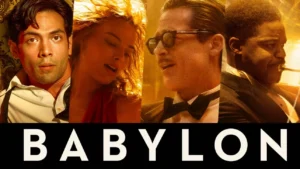
I’m eliminating more of my streaming services and because of that, I’m trying to catch things before I lose access. “Babylon” was recommended by one of the services, and even though I couldn’t remember hearing of it before, I figured with so much eye candy, it couldn’t be too bad to watch. It offered more than I anticipated.
The movie is the story of sound technology upending the film industry, from the way movies were made to the lifestyles of the filmmakers themselves. Even though we’re typically presented a whitewashed version of that early era, in considering the transformation of the medium, writer Damien Chazelle incorporated significant experiences of pioneering Asian American, African American, and Mexican American performers who were part of the industry. In a pivotal scene with Jean Smart, Brad Pitt’s character is confronted with the obsolescence of his skill set, thus the ending of his career because his aging character wasn’t able to perform beyond the abilities required in a silent film.
ADVERTISEMENT
ADVERTISEMENT
I couldn’t help but draw lines between the advent of sound engineering and generative AI. Both redefined industries.
Being able to reproduce sound was huge! It allowed for the development of the music industry, and it advanced how media could transmit information in television, movies, and radio. Jobs were both transformed and created. Some jobs were lost as this transition ultimately increased profit margins, but many more jobs were created.
Generative AI develops sound, scripts, characters, and scenery. It narrows the need for workers, requiring only those who operate specific design tools.
I think about how content creators – and their audiences – across media sources will be impacted by AI.
ADVERTISEMENT
ADVERTISEMENT
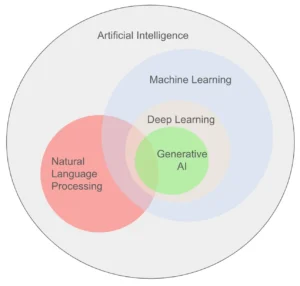
AI is more that generative AI; more than ChatGPT, Claude, or CoPilot. It’s more than creating texts or images, more than reading and summarizing text. Scientists are getting through massive amounts of data in less time and with greater computational accuracy than ever before. Business leaders are using AI platforms to manage their time, organize workflows and schedule inventory. Every industry is being invaded by tools that seem more efficient than humans in processing and organizing information, thus setting the expectation for work to be faster and more cost effective.
I don’t like AI.
Imagine if “Bablyon” had been written by ClaudeAI rather than Damien Chazelle. Whose story would the movie tell? We can’t answer that on any level. AI would randomly arrange one word after the other in a manner that would be void of texture, innuendo, culture, and inclusivity, at times it would even be meaningless. How would ClaudeAI develop the absurdity of elephants at a party in SoCal, or the humiliation of a Black musician required to wear black face while performing? How could it layer the audience’s reactions to a beloved, aging actor playing an aging acting in a role about the demise of his career? Whose story would it tell? How intricate and how accurate would it be?
Ultimately, though, I’m writing about libraries. The future of AI lies very much in libraries, not because librarians (and libraries) like other information workers are threatened by AI, but because library science is the field that teaches AI Literacy.
Librarians use their programs and instruction sessions to educate library users in the same way they teach and support reading, computer, financial, STEM, and media literacies. This 21st century literacy educates users about when to use AI, which tools to use, and how to be ethical when using it by developing appropriate skills, knowledges and dispositions. This instruction should maintain a critical stance grounded in decolonization theory that addresses the ways artificial technologies further marginalizes based on wealth and intelligence (while reducing our cognitive capacity), practices predatory extraction, while also examining data sourcing, the profit motive and anti-Blackness. AI literacy is as much about AI’s backstory as it is about its functionality.
“Consider how AI might respond to questions about career options, mental health resources, or historical events. If the training data reflect societal biases, the AI will amplify those prejudices while presenting them as factual, objective information. For adolescents still forming their worldviews, this presents serious risks.” (source)
“How Can We Upskill Gen Z as Fast As We Train AI?” provides evidence on this young generation’s exposure to AI, and the skills and attitudes they’re developing. In general, they overestimate both their skill in using the technology and the reliability of the technology, and this indicates an inability to evaluate the tools or to critically evaluate results. “Gen Z’s familiarity with AI, particularly in areas like video monitoring and information retrieval, can sometimes lead to overlooking potential ethical concerns. As ‘social media natives,’ they may underestimate the risks and are usually quick to adopt new tools, which is why it’s crucial to teach them not only how to use AI, but to critically evaluate its ethical implications and limitations.” (source)
Approaches to AL literacy vary, just as those to Information literacy. One of the best frameworks I’ve seen for primary and secondary education is Empowering Learners for the Age of AI: An AILit Framework for Primary and Secondary Education, a joint initiative of the European Commission (EC) and the Organization for Economic Cooperation and Development (OECD). Code.org and leading international experts support its development. The American Association of Colleges and Universities (AAC&U) and Elon University have released the Student Guide to Artificial Intelligence which is endorsed by The American Library Association, NASPA, EDUCAUSE, Online Learning Consortium, and AMICAL Consortium – American international liberal arts institutions. It is available in Spanish and English.
I’m afraid of what I see coming. I do believe we’re in peril, not because of what AI can do, but what we’re allowing it to do. It is bigger than us; it’s becoming bigger than our humanity. As artificial intelligence grows, we owe it to our collective future to provide an understanding of how this stuff works on every level. We have an obligation to teach what AI can do so that we can make demands of our leaders, choose sustainable careers, think critically, maintain positive mental health, and if we use AI, do so responsibly.
If you haven’t developed a skillset around AI, there’s real power in learning from and with those who surround you. I’ve been learning with my children.
The Royal Library of Ashurbanipal was the library in Babylon.
“It’s bigger than us.”
Be well and do good.
Filed under: Professional Development

About Edith Campbell
Edith Campbell is Librarian in the Cunningham Memorial Library at Indiana State University. She is a member of WeAreKidlit Collective, and Black Cotton Reviewers. Edith has served on selection committees for the YALSA Printz Award, ALSC Sibert Informational Text Award, ALAN Walden Book Award, the Walter Award, ALSC Legacy Award, and ALAN Nielsen Donelson Award. She is currently a member of ALA, BCALA, NCTE NCTE/ALAN, REFORMA, YALSA and ALSC. Edith has blogged to promote literacy and social justice in young adult literature at Cotton Quilt Edi since 2006. She is a mother, grandmother, gardener and quilter.
ADVERTISEMENT
ADVERTISEMENT
SLJ Blog Network
A “place of isolation” where you can feel safe: It’s a Loren Long The Boy and the Island Cover Reveal and Q&A
Cooking with Monsters: Best Served Cold | Preview and Trailer
From Policy Ask to Public Voice: Five Layers of Writing to Advance School Library Policy
Book Mail: Magical cupboards, fake dating, a romantasy anthology, a witch hunt, and more!
ADVERTISEMENT